02Project
Synfield
An immersive web experience where movement becomes light, matter and sound. Interactive worlds shaped by touch, movement and natural hand gestures.
The idea
What if nothing had to be useful?
Most digital experiences ask something of us. A task to complete. A problem to solve. A result to produce.
I spend much of my time making things useful. With Synfield, I wanted to explore the opposite: creating something simply because I was curious about what it could become.
Here, movement becomes light, matter and sound. There are no scores or destinations. Through touch, the mouse or natural hand gestures, you can transform what you see, or simply watch it unfold — and the same world becomes a different experience with every interaction.
Nothing to achieve. Something to experience.
At a glance
- Interactive worlds, free in the browser
- 20
- Ways to interact: mouse & keyboard, touch, hands
- 3
- Languages
- 7
Figures as of November 2026.
Nebula
From observing to interacting.
Nebula, the first world of Synfield, is running in this page with its own engine. It is already moving. When it fills the screen, it answers your hand: move through it, hold to gather light, let go.
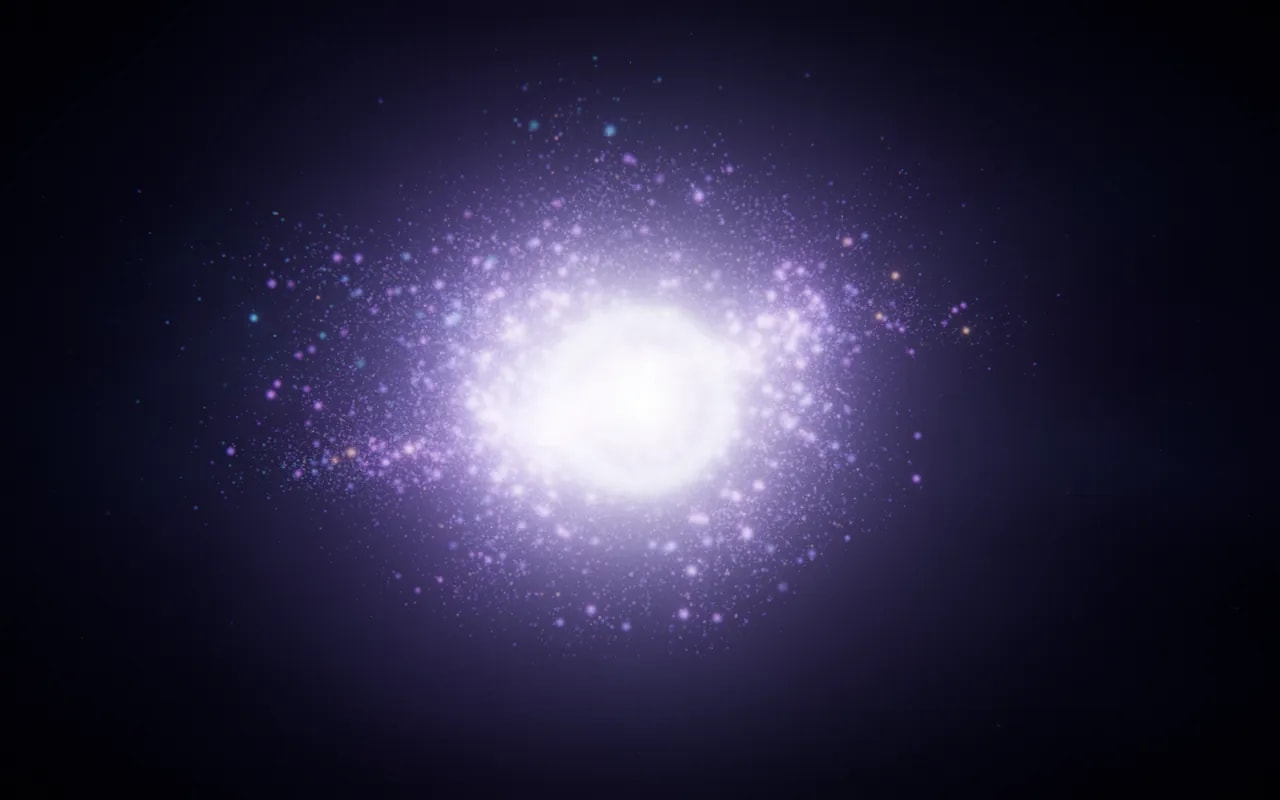
Nebula — live, running on Synfield’s own engine.
Scroll to step inside.
Transform · connect
Two ways for movement to meet a world.
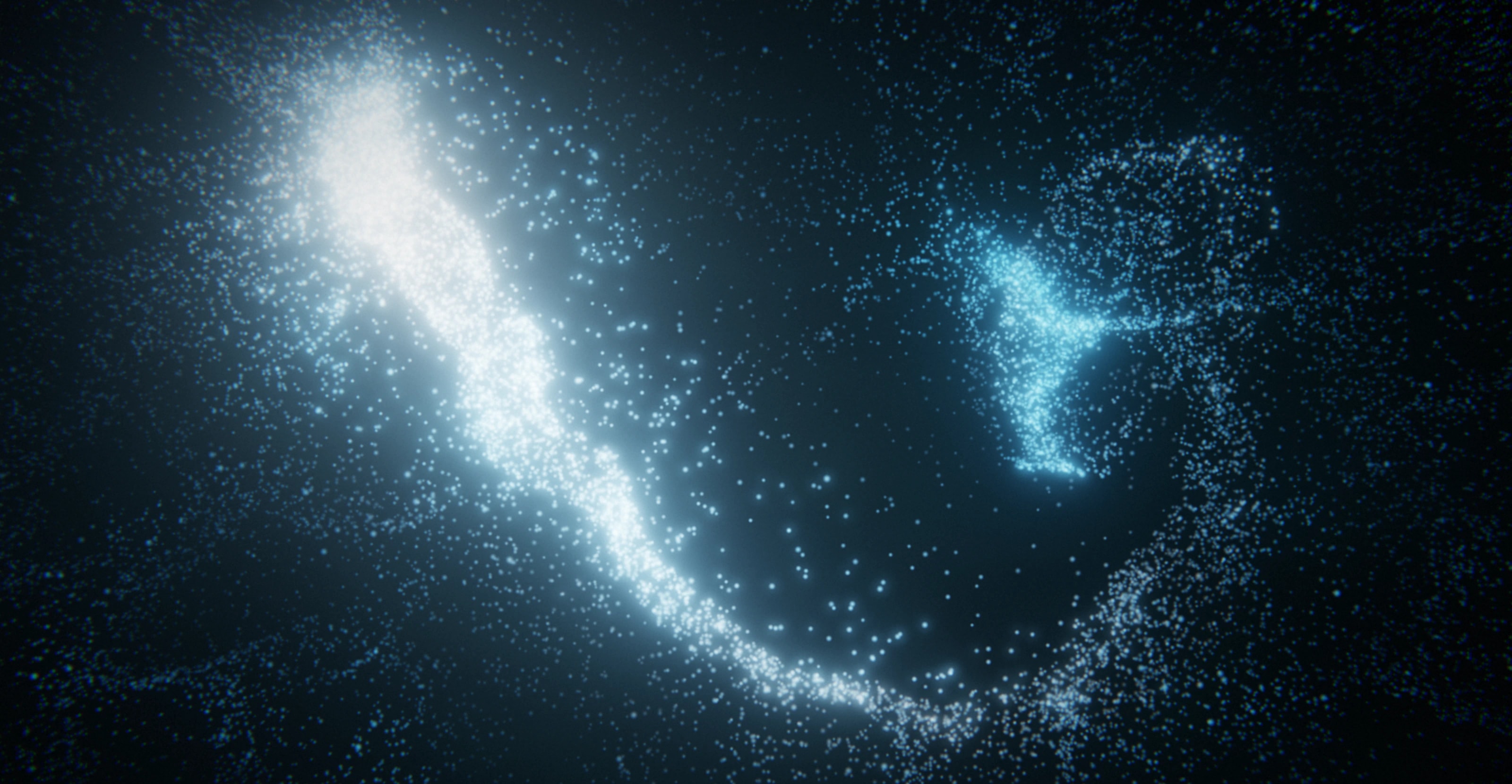
Matter
Some worlds behave like a substance. In Matter a gesture doesn’t select or press anything: it moves through a mass of luminous particles, which gather, stretch and scatter in answer to it.
Constellation
Relations
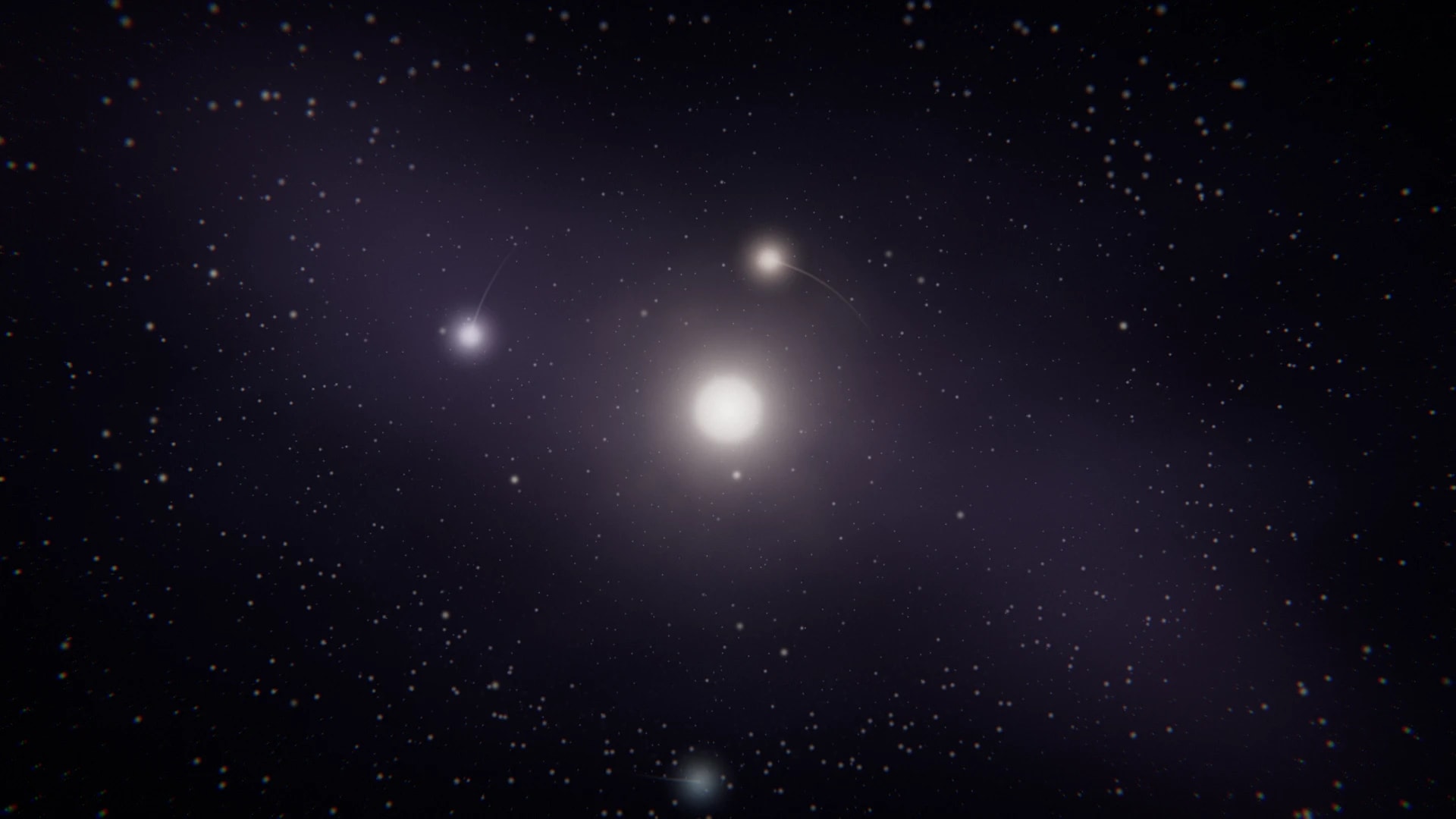
Here the world is made of relations rather than mass: points of light joined into figures, a map that keeps being redrawn as you move through it.
Constellation — real capture.
Sound
Sound in Synfield is not a soundtrack. It is generated live with the Web Audio API and responds to movement and to the behaviour of each world; its volume is the visitor’s to set.
Abyss
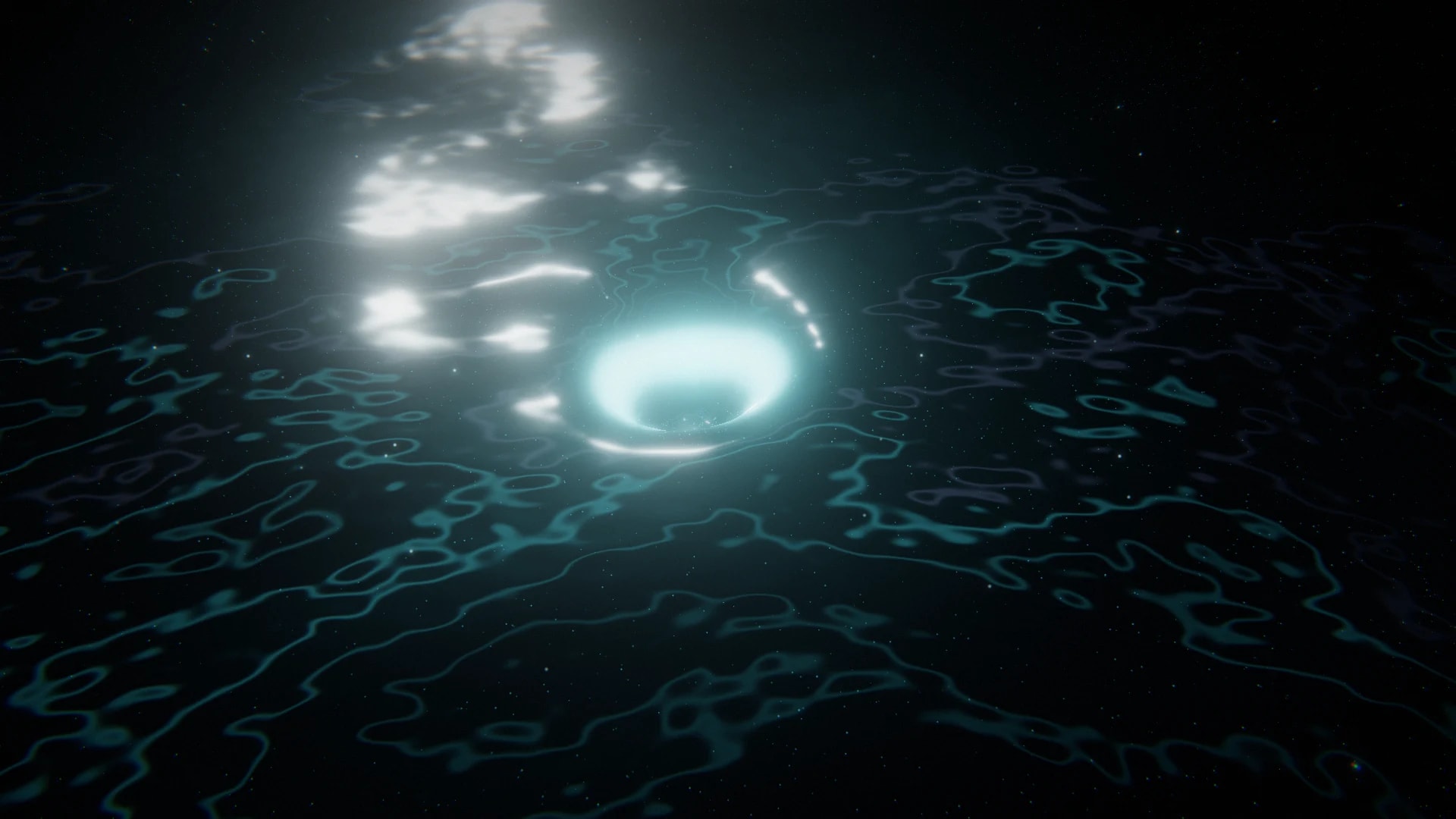
After movement and connection, a slower world. Light drifts through deep water; nothing asks to be done.
A 33-second recording of the world, muted, on loop.
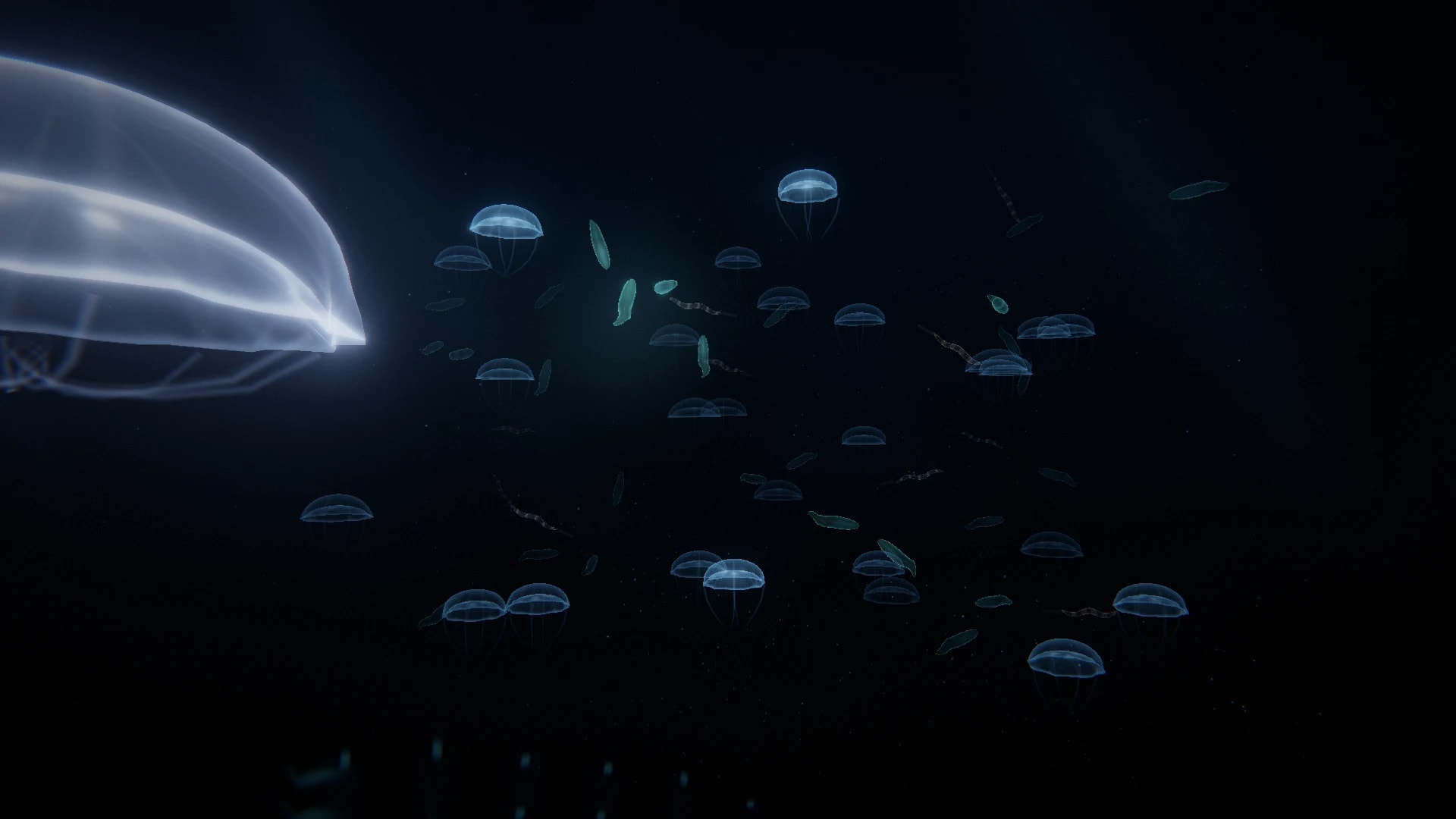
This film plays from Vimeo. Loading it connects to Vimeo, which may set its own cookies.
Eclipse
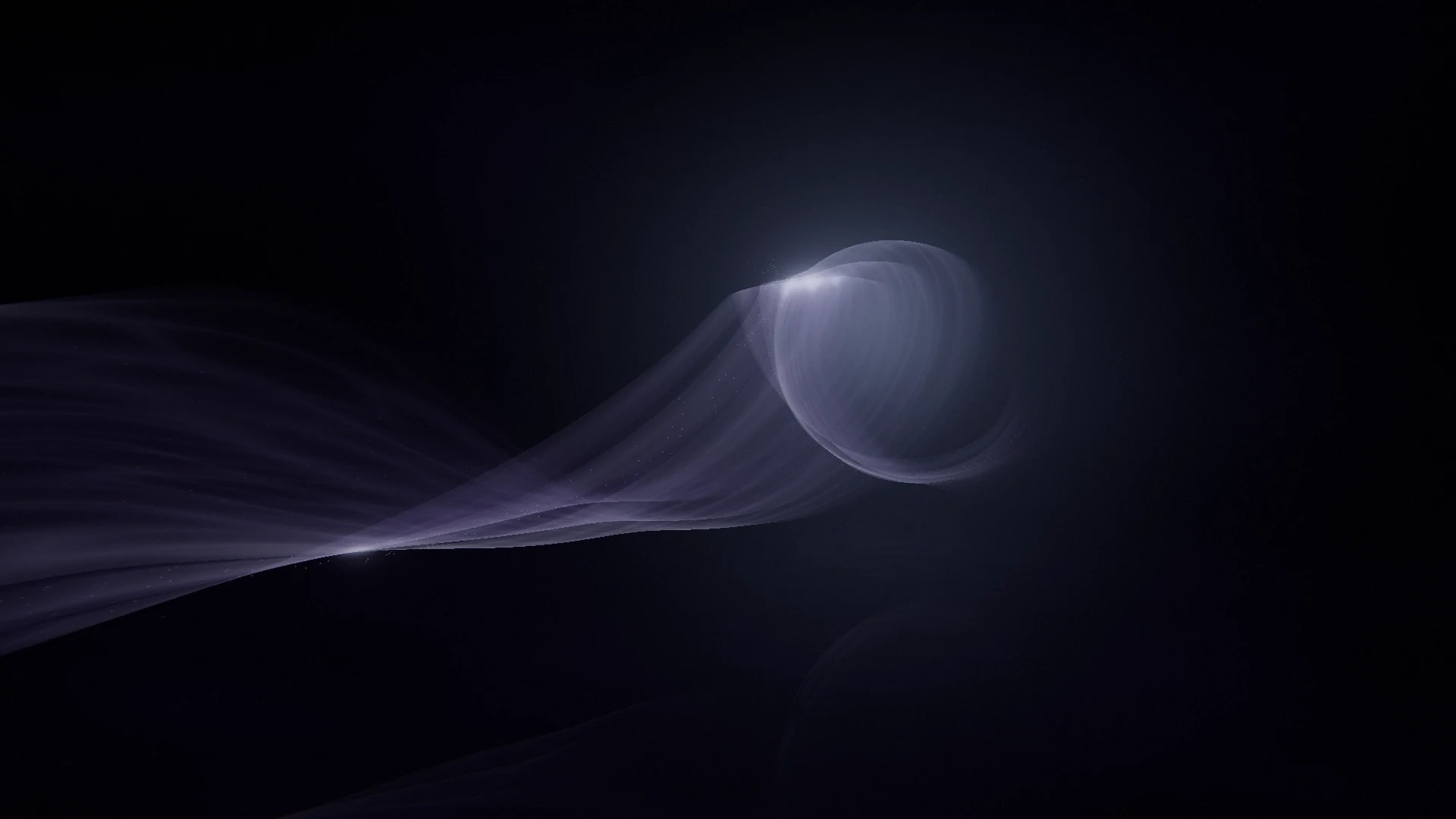
Light only exists against the dark.
Across the twenty worlds, scale, contrast and perception carry as much as any effect.
Eclipse — real capture.
Recognition & press
Beyond the screen.
Since its launch in October 2026, Synfield has been awarded, nominated and written about.
Awards & recognition
Behind the invisible
It starts with a feeling, not a feature.
A world usually begins with an image, a sensation or a particular gesture: something soft, metallic, organic, resistant or fluid. Prototypes that look beautiful are dropped if they don’t carry that quality. Most of the work is tuning behaviour, reaction time and texture until the world feels the way it was imagined.
One of the most interesting lessons has been that immersion depends on much more than graphics. The timing of a gesture, the way a visual reaction fades, how the interface disappears when it is no longer needed, or how an environment responds to a slower movement can change the experience as much as the rendering technique underneath.
How a world responds
Every world shares the same interaction language, and answers it in its own way.
01Input
Mouse and keyboard, touch, or your hands
Hand tracking is optional: MediaPipe reads the camera locally, in the browser.
02Gesture
Read as movement
Hand position, palm openness and pinches become inputs; pointer and touch follow the same interaction language.
03World
Each world answers in its own way
Its own rendering logic and behaviour: particle systems, fluid simulations, connected constellations, responsive geometric forms.
04Response
Light and sound
Real-time graphics with Three.js and WebGL2; sound generated with the Web Audio API, tied to the interaction rather than a fixed soundtrack.
Invisible decisions
Invisible decisions
Interaction
Several ways in — mouse, keyboard, touch or optional hand tracking — and one coherent language across the worlds, adapted to each device. Adaptive controls and a navigation system that steps aside when it isn’t needed.
Performance
Worlds load on demand, graphics quality adapts to the device, and a Canvas 2D fallback takes over when WebGL2 is unavailable. There is no application backend.
Sensory comfort
Visual intensity, motion, glow and volume can be adjusted. Sound and camera are optional, exploration is self-paced, and hand tracking is processed locally in the browser.
Tools & Stack
Everything runs in the browser, without an application backend.
- Interface
- React · TypeScript · Vite
- Graphics
- Three.js · WebGL2 · Canvas 2D
- Canvas 2D as the fallback renderer.
- Input
- MediaPipe
- Hand tracking, processed locally.
- Sound
- Web Audio API
Evolution
Still taking shape.
Oct 2026
First experiments
MediaPipe, particles, movement and the first interactions with real-time graphics.
Oct 2026
Public launch
Synfield opens at synfield.space as a free browser experience, with 16 worlds.
Oct–Nov 2026
An evolving collection
Twenty worlds; refinements to accessibility, interaction and performance; Postcards to capture and share compositions.
Shape the invisible.
Synfield is meant to remain an evolving creative space rather than a finished collection: refining the worlds, exploring richer interactions and new ways of connecting light, movement and sound.